
The king of war
- Captain Justus
- 24 jun 2024
- 3 minuten om te lezen

Bijgewerkt op: 15 jul 2024
If you had to guess which vehicle is dominant in moder war, what woudl your answer be? Would you think Tanks would be the dominant force on the battle field? Tanks are indeed the symbol of modern war, but no. maby you tought fighter jets? Fighter jets do play a large role in ensuring victory but still no.
The answer to the question is the old humble artillery

Source: wall.alphacoders.com
You might be asking, why? what makes artillery still so important in war, when we have other ways of fighting. Well let me take you on a journy about the history of artillery and you will find out why its still the king of battle.
Early Beginnings
The use of artillery dates back to ancient times, with early examples including catapults, ballistae, and trebuchets. These primitive machines were designed to hurl large projectiles over great distances, breaking through enemy fortifications and causing chaos within their ranks. The effectiveness of these early artillery pieces laid the groundwork for the development of more advanced weaponry.

Source: trenuchet Wikipedia contributors. (2002b, maart 8). Trebuchet. Wikipedia. https://en.wikipedia.org/wiki/Trebuchet
he Age of Gunpowder
The invention of gunpowder in the 9th century revolutionized artillery. Cannons became the dominant form of artillery, capable of launching projectiles with unprecedented power and accuracy. During the Renaissance, European armies began to standardize their artillery, developing a variety of cannons and mortars for different battlefield roles. The introduction of rifling in the 19th century further enhanced the accuracy and range of artillery, making it a more formidable force.

Source: Artillery during the Napoleonic era Kalibr. (2020, 29 augustus). Артиллерия покорителя Европы. Военное Обозрение. https://en.topwar.ru/174356-artillerija-pokoritelja-evropy.html
Artillery in the World Wars
Artillery reached new heights of effectiveness during the World Wars. In World War I, artillery was responsible for the majority of battlefield casualties, with massive barrages preceding infantry assaults to soften enemy defenses. Innovations such as creeping barrages and counter-battery fire tactics were developed to maximize the destructive potential of artillery.
World War II saw further advancements, with the introduction of self-propelled artillery and rocket artillery. These innovations allowed for greater mobility and flexibility on the battlefield, enabling armies to deliver devastating firepower wherever it was needed most. The conflict also saw the use of artillery in combined arms operations, where it was integrated with infantry, armor, and air support to create a synergistic battlefield strategy.

Source: artillery during the battle of the Somme in ww1 File:British artillery in action, World War I.JPEG - Wikimedia Commons. (1916, 1 augustus). https://commons.wikimedia.org/wiki/File:British_artillery_in_action,_World_War_I.JPEG
Modern Artillery: The King of Battle
Despite the advent of advanced technologies such as precision-guided munitions, drones, and cyber warfare, artillery remains a crucial component of modern military arsenals. Modern artillery systems, such as the M777 howitzer and the M270 Multiple Launch Rocket System (MLRS), combine the raw destructive power of traditional artillery with cutting-edge technology to enhance accuracy, range, and lethality.

Source: modern artillery Esd. (2024, 5 maart). Modern artillery fire control equipment is a requirement for all armed forces. European Security & Defence. https://euro-sd.com/2024/03/articles/36885/modern-artillery-fire-control-equipment-is-a-requirement-for-all-armed-forces/
Artillery's continued relevance in modern warfare can be attributed to several factors:
1. Versatility: Artillery can be used for a wide range of missions, from providing suppressive fire and destroying enemy fortifications to delivering precision strikes against high-value targets. Its ability to adapt to various battlefield scenarios makes it an indispensable asset.
2. Firepower: Artillery delivers immense firepower capable of inflicting significant damage on enemy forces and infrastructure. This firepower is essential for shaping the battlefield and disrupting enemy operations.
3. Psychological Impact: The sheer power and noise of artillery can have a profound psychological effect on enemy troops, lowering their morale and combat effectiveness. The threat of artillery fire can also influence enemy tactics and decision-making.
4. Force Multiplier: When integrated with other elements of a military force, such as infantry, armor, and air support, artillery acts as a force multiplier. It enhances the overall effectiveness of the force, allowing for more coordinated and decisive actions.
5. Cost-Effectiveness: Modern artillery systems provide a cost-effective means of delivering firepower compared to some other military technologies. Their ability to deliver sustained fire over long distances without the need for constant resupply makes them a valuable asset in prolonged engagements.
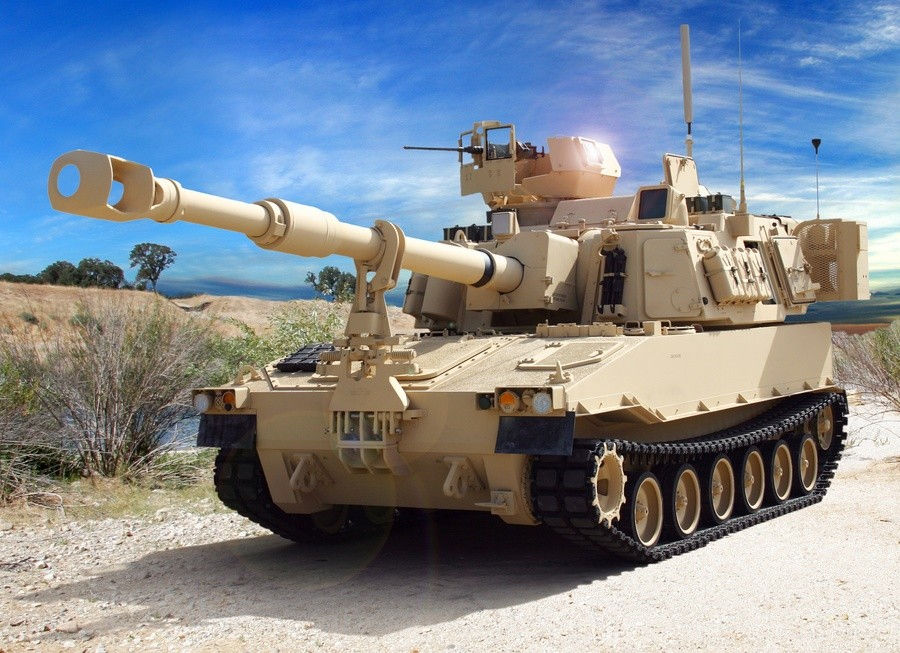
Source: Self propelled artillery, the love child between a tank and a cannon. The Official Home Page of the United States Army. (z.d.). www.army.mil. https://www.army.mil/
Conclusion
From its early days as a primitive siege engine to its current role as a sophisticated and versatile weapon system, artillery has proven itself to be the king of battle. Its ability to deliver devastating firepower, shape the battlefield, and support combined arms operations ensures that it will remain a vital component of military strategy for the foreseeable future. As technology continues to evolve, artillery will undoubtedly adapt and maintain its reign as a cornerstone of modern warfare.



Opmerkingen