
Drones: the way they changed war
- Captain Justus
- 11 jul 2024
- 3 minuten om te lezen

Bijgewerkt op: 15 jul 2024
Military drones have dramatically transformed modern warfare, introducing new capabilities and strategic advantages that were once the stuff of science fiction. These unmanned aerial vehicles (UAVs) have become crucial in intelligence gathering, surveillance, reconnaissance, and precision strikes, enhancing the effectiveness of military operations while reshaping strategic doctrines and ethical considerations.

Source: Reaper drone. Lionel, E. (2022, 6 juni). France arms Reapers with GBU-12 Paveway II bombs in support of Barkhane. Military Africa. https://www.military.africa/2021/07/french-arms-reapers-with-gbu-12-paveway-ii-bombs-in-support-of-barkhane/
Evolution and Capabilities
The journey of military drones began with basic surveillance missions, but rapid advancements in technology have significantly expanded their capabilities. Initially, drones were primarily used for intelligence gathering and surveillance, equipped with high-resolution cameras and advanced sensors that provided real-time imagery and data. This allowed military commanders to make informed decisions with greater precision.

Source: A Radioplane OQ-3 one of the first drones Category:Radioplane OQ-2 - Wikimedia Commons. (z.d.). https://commons.wikimedia.org/wiki/Category:Radioplane_OQ-2
Today’s military drones are far more sophisticated. Armed drones, such as the MQ-9 Reaper, are equipped with precision-guided munitions, enabling targeted strikes against high-value targets. This ability to deliver pinpoint attacks with minimal collateral damage has made drones invaluable in counterterrorism operations and asymmetric warfare.
Strategic Advantages
One of the most significant advantages of military drones is their ability to operate in environments too dangerous for manned aircraft. Drones can be deployed in contested airspace without risking the lives of pilots, making them ideal for missions in hostile regions. This has allowed militaries to gather intelligence and conduct operations in areas that were previously inaccessible or too risky.
Drones also offer unparalleled endurance and persistence. Unlike manned aircraft, which are limited by human endurance and the need for regular maintenance, drones can stay airborne for extended periods. This continuous presence in the sky provides persistent surveillance capabilities, ensuring that military forces have a constant flow of real-time information.
The introduction of drones has led to significant changes in warfare tactics. The ability to conduct remote strikes with high precision has shifted the focus from traditional large-scale military engagements to targeted operations. This shift has been particularly evident in counterterrorism efforts, where drones have been used to eliminate key leaders and disrupt terrorist networks with surgical precision.

Source: US predator drone striking terrorist. De Jong, S. (2016, 1 juli). Raketten afvuren vanaf kantoor. Drones maken oorlogen minder vuil. NRC. https://www.nrc.nl/nieuws/2011/10/10/raketten-afvuren-vanaf-kantoor-drones-maken-oorlogen-minder-vuil-a1481936
Moreover, the use of drones has facilitated a shift towards network-centric warfare, where real-time data and information sharing are critical. Drones act as eyes and ears on the battlefield, feeding data back to command centers and other units. This interconnected approach enhances situational awareness and allows for more coordinated and effective military operations.
Cost
Military drones can be a highly cost-effective means of engaging the enemy. While some advanced drones can be quite expensive, with costs around $25 million, they are still significantly cheaper than standard fighter jets, which can easily cost four times as much. Most military drones, however, are priced around $700,000, making them one of the most affordable military technologies available.
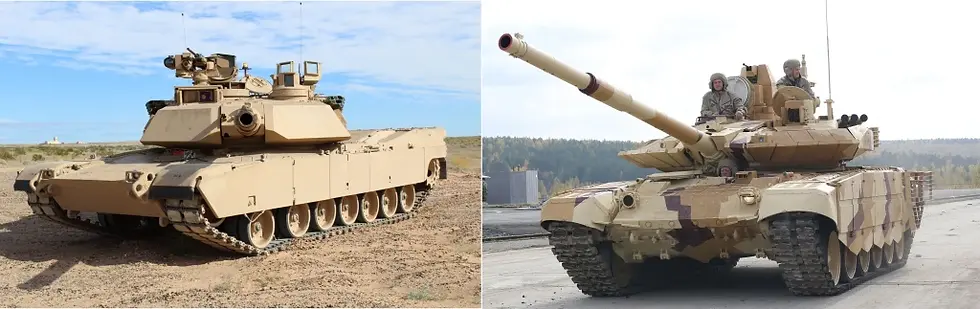
Drones have been used effectively in the Russia-Ukraine war, where both sides have utilized inexpensive drones to combat the enemy. A notable example is Russia's use of $500 drones to destroy tanks worth between $5 and $10 million. This demonstrates the significant tactical advantage and cost efficiency that drones bring to modern warfare.
Impact on Warfare Tactics

Source: the $500 dollar Russian Pirahna drone resposible for destroying Abram tanks. https://vpk.name/en/832995_drone-from-heaven-how-the-piranha-uav-hit-the-first-abrams-tank.html
Ethical and Legal Considerations
The rise of military drones has also sparked important ethical and legal debates. The ability to conduct remote strikes raises questions about accountability and the potential for civilian casualties. Ensuring that drone operations adhere to international laws and minimize collateral damage remains a challenge for military forces.
Additionally, the psychological impact on drone operators, who are often located thousands of miles away from the battlefield, has become a topic of concern. The detachment from the immediate effects of warfare can create unique stressors and ethical dilemmas for those who operate these machines.
The Future of Military Drones
As technology continues to evolve, the role of military drones is likely to expand further. Emerging technologies such as artificial intelligence and machine learning are expected to enhance the capabilities of drones, enabling them to perform more complex missions autonomously. This could include swarming tactics, where multiple drones operate in coordination to overwhelm enemy defenses, or enhanced decision-making processes that reduce the need for human intervention.
In conclusion, military drones have revolutionized warfare by providing new capabilities that enhance intelligence, surveillance, and targeted strike operations. Their ability to operate in dangerous environments, coupled with their endurance and precision, has made them an indispensable tool in modern military arsenals. As technology advances, the role of drones in warfare will continue to evolve, presenting both opportunities and challenges for military strategists and policymakers alike.

Source: reaper drone .X.com. (z.d.). X (Formerly Twitter). https://x.com/patricksavalle/status/1635717756958957569


Opmerkingen